The message doesn't start at your desk. It starts all week.
One place to catch the sparks, spoken or typed, on your phone or at your desk, and shape them into what you're preparing next.
How it works
Capture
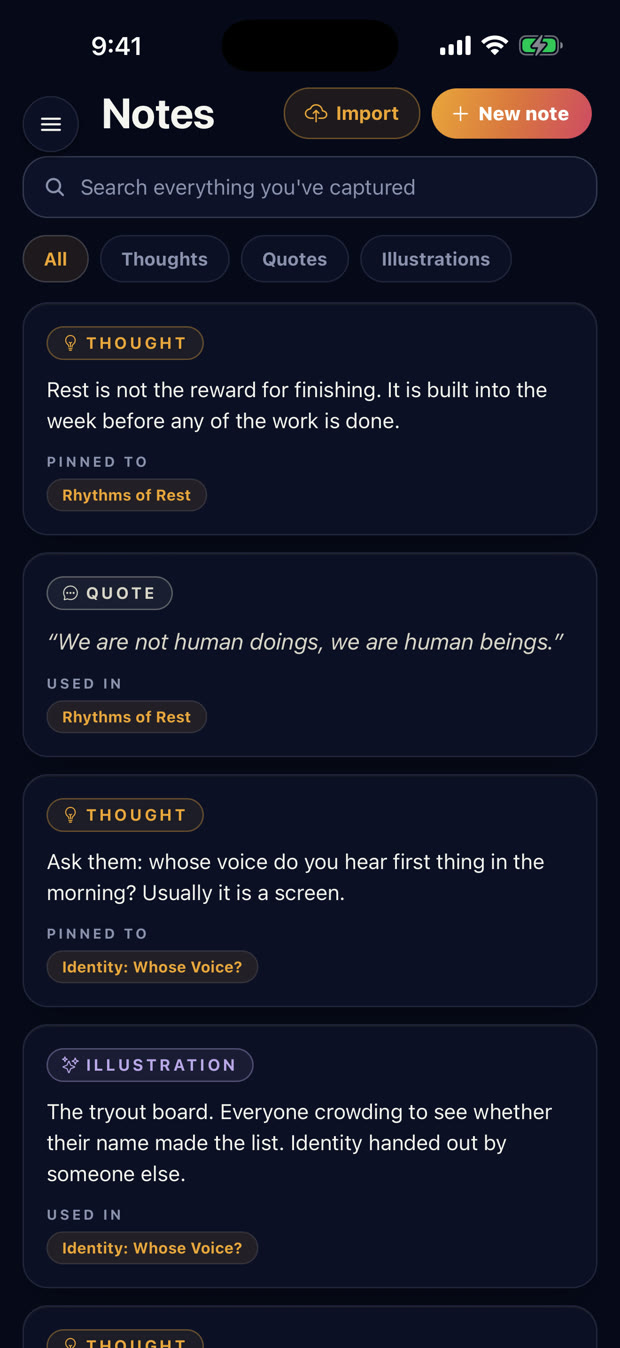
One box, always ready. A thought, a quote, an illustration, two lines or two paragraphs. Scripture references are detected as you type and linked to the full text.
Speak it instead. Voice capture turns a red-light idea into a saved note.
Already have years of notes? Paste them in bulk and Preacher Prep splits each one and tags its scripture for you.
Shape
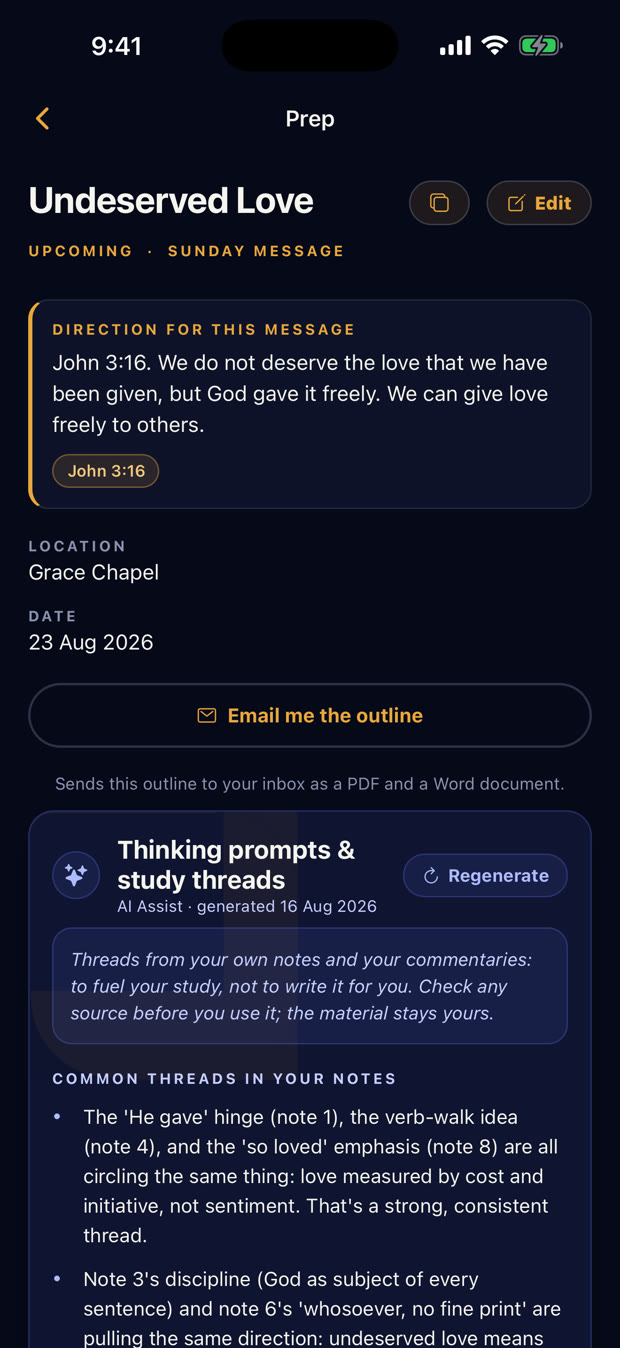
Pin notes to a Prep: a date, a place, a passage. Watch a scattered week gather itself into an outline: scripture, your thinking, the quotes worth keeping.
Everything else waits in your Notes, searchable the moment you need it.
Preach
Export a clean outline and step up prepared. Afterwards, the Prep keeps its record: what you delivered, where, and every note that fed it.
Nothing is lost. Next year's message may already be in this year's notes.
AI Assist
It never writes it for you. It surfaces the threads.
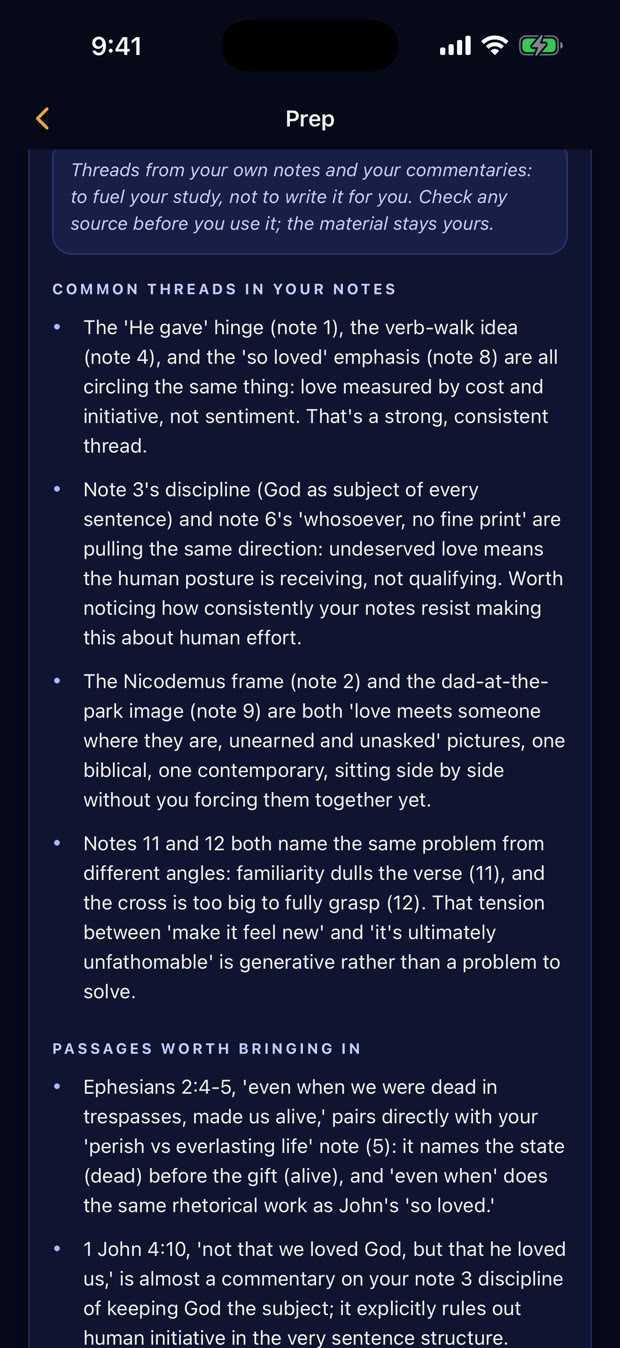
When you're ready, AI Assist reads your notes for a Prep and surfaces the study threads: common throughlines across your own notes, exact insights from the commentaries you've chosen, a few sharp questions, and pointers worth researching. The voice up front is still yours.
Amber is you. Cobalt is the assistant. They never trade places.
Your notes stay private. They're read only when you ask for prompts, and never used to train AI models.
Across the commentaries
Questions worth sitting with
Capture to delivery, in your pocket.
A message on John 3:16 taking shape: the Prep, then the study threads and questions AI Assist surfaced from the notes behind it.